The Dangerous Cost of AI Personalization in Education
Daftar Isi
- The Velvet Cage: The Illusion of Perfect Learning
- The GPS Effect: Why We Are Losing Our Intellectual Map
- Cognitive Offloading and the Death of the 'Why'
- Algorithmic Echo Chambers in the Modern Classroom
- The Frictionless Fallacy: Why Struggle is Essential
- Reclaiming Autonomy: Strategies for the AI Era
- Conclusion: Balancing Silicon and Soul
We can all agree that the promise of modern education technology is intoxicating. Imagine a classroom where every student has a private tutor that never tires, never judges, and perfectly adapts to their unique pace of learning. It sounds like a utopia. AI in education risks becoming the ultimate double-edged sword, offering efficiency while quietly dulling the very tools we use to navigate the world. This article will show you how the "perfect fit" of personalized algorithms might be shrinking your intellectual horizon. We are going to explore why the substitution of human struggle with silicon-grade convenience is a trade-off we might regret.
Think about it.
Every time an algorithm decides what you should learn next, a small part of your decision-making muscle withers. We are entering an era of "intellectual pre-chewing," where information is served so softly that we no longer need teeth to consume it. But without teeth, how can we ever hope to bite into the hard truths of a complex world?
The Velvet Cage: The Illusion of Perfect Learning
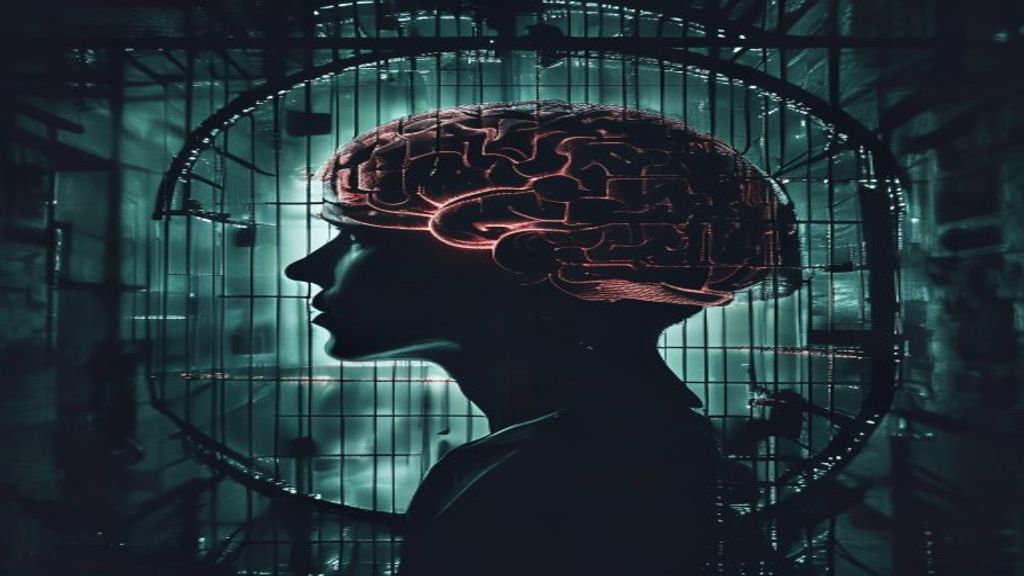
Adaptive learning software is often marketed as the ultimate liberation. It promises to meet students "where they are." However, there is a hidden danger in being met exactly where you are: you might never be forced to go anywhere else. This is what I call the Velvet Cage of Personalization.
When an AI analyzes a student's data points, it creates a custom-tailored path. It identifies gaps in knowledge and fills them. It notices frustration and lowers the difficulty. While this sounds efficient, it ignores the biological necessity of resistance. In weightlifting, if the weights are always adjusted to be "just right" so that you never strain, your muscles will never grow. Personalized learning algorithms act as a spotter that takes the weight away the moment you start to sweat. We are trading long-term strength for short-term comfort.
But wait, there is more.
This "customization" often results in the erasure of serendipity. In a traditional library, you might find the most life-changing book by accident while looking for something else. In a personalized digital environment, you only find what the algorithm thinks you are ready for. You are trapped in a loop of your own existing preferences and past performance. This is the first step toward the erosion of intellectual autonomy.
The GPS Effect: Why We Are Losing Our Intellectual Map
Consider the analogy of the modern GPS. Twenty years ago, if you wanted to get across a city, you had to study a map, understand landmarks, and internalize the spatial relationship between North and South. Today, we simply follow the blue line. We arrive at our destination faster, but we have no idea where we are or how we got there. If the phone dies, we are lost.
This is exactly what is happening with cognitive offloading in education. When students use AI to summarize complex texts or solve multifaceted problems, they are following the "blue line" of silicon logic. They reach the "answer" (the destination), but they haven't built the internal mental map required to navigate the subject matter independently. The process of getting lost—the frustration, the re-reading, the trial and error—is precisely what builds critical thinking.
Here is the kicker.
When we outsource the "process" to an AI, we are not just saving time. We are abandoning the neural pathways that allow us to synthesize information. We are becoming passengers in our own minds, trusting the silicon driver to take us where we need to go without ever learning how to drive the vehicle of thought ourselves.
Cognitive Offloading and the Death of the 'Why'
The term "cognitive offloading" refers to our tendency to use physical or digital tools to reduce the mental effort required for a task. While using a calculator for long division is a harmless form of offloading, using AI to generate an argument for an essay is a direct threat to digital intellectual autonomy.
Why does this matter?
Because the "Why" is the most human part of learning. AI is excellent at the "What" and the "How-To," but it has no grasp of the "Why." When a student asks a personalized AI for help, the AI provides a streamlined path to the result. It removes the need for the student to ask themselves: "Does this make sense? Is this evidence valid? Why does this conclusion follow these premises?" By removing the friction of the "Why," we are creating a generation of high-speed answer-getters who lack the depth to understand what the answers actually mean.
Algorithmic Echo Chambers in the Modern Classroom
We are already familiar with how social media creates echo chambers. We see only what we like, and we hear only what we agree with. Now, imagine this technology applied to the foundational years of education. This is one of the most significant educational technology pitfalls currently facing us.
If an AI learns that a student responds better to visual stimuli and certain types of simplified narratives, it will continue to feed that student visual, simplified content. Over time, the student's ability to engage with dense, text-heavy, or contradictory information atrophies. They become a specialist in their own learning style, but a cripple in every other domain. They are trapped in an algorithmic echo chamber of their own making, or rather, of the algorithm's making.
True education is supposed to be an encounter with the "Other"—with ideas that are difficult, alien, and uncomfortable. Personalization, by its very definition, seeks to eliminate the "Other" in favor of the "Self." It turns the classroom into a mirror instead of a window.
The Frictionless Fallacy: Why Struggle is Essential
There is a dangerous belief in EdTech circles that learning should be "frictionless." The goal is to make it as easy as possible to absorb information. But science tells us the opposite: we remember what we struggle with. We understand what we have wrestled with. This is the critical thinking erosion that nobody is talking about.
Imagine trying to learn a new language. If you have an AI that instantly translates every word for you and corrects your grammar in real-time before you even finish the sentence, you will never learn the language. You will learn how to use the tool, but the language will never live inside your brain. The "friction" of trying to remember a word, failing, and then finally finding it is the very spark that creates the memory.
By removing friction, AI personalization is effectively "intellectually pre-chewing" our food. It makes digestion easy, but it leaves our jaws weak. If we continue down this path, we will produce a society that is highly "informed" but fundamentally incapable of deep, original thought.
- AI removes the struggle of synthesis.
- Personalization limits exposure to challenging perspectives.
- Efficiency is prioritized over deep comprehension.
- Dependency on silicon leads to mental atrophy.
Reclaiming Autonomy: Strategies for the AI Era
So, how do we fight back? We don't need to throw the computers out the window, but we do need to change how we interact with them. To combat adaptive learning software's negative effects, we must intentionally re-introduce "desirable difficulties" into our lives.
First, we must practice "manual thinking." This means setting aside the AI during the initial stages of any creative or analytical task. Before asking a chatbot for an outline, write one yourself. Before looking for a summary, read the original text and get confused. Confusion is not a bug; it is a feature of a working brain.
Second, we must seek out "Intellectual Diversity." Don't let the algorithm choose your next book or your next topic of study. Go to a physical bookstore. Pick up a magazine about a topic you know nothing about. Force your brain to encounter data that hasn't been "personalized" for you. This is how you maintain your intellectual autonomy in a world of silicon substitution.
Conclusion: Balancing Silicon and Soul
The rise of AI in education is inevitable, but its total dominance is not. While personalized algorithms offer a powerful tool for remediation and efficiency, they cannot replace the raw, messy, and frustrating process of genuine human learning. We must be wary of any technology that promises to make thinking "easy." Thinking is supposed to be hard. It is the hardest thing we do, and it is also the most important.
If we allow the silicon substitution to take over, we risk becoming a civilization of sophisticated users who understand nothing of the systems they inhabit. We must protect the "Why" at all costs. To prevent AI in education risks from becoming our new reality, we must choose the difficult path over the personalized one. We must choose the map over the GPS. We must choose the struggle, for it is in the struggle that we find our true selves.
Let us use AI as a ladder, not as a crutch. Let us ensure that while our tools get smarter, we don't get lazier. Intellectual autonomy is not a gift; it is a muscle. And it is time we started exercising it again before the algorithms decide we don't need it anymore.
Posting Komentar untuk "The Dangerous Cost of AI Personalization in Education"