The Biohacking Divide: Are We Coding Biological Inequality?
Daftar Isi
- The Dawn of the Biological Gated Community
- The Mechanics of Longevity Inequality
- Epigenetic Reprogramming: The New Status Symbol
- Homo Optimus: The Emerging Evolutionary Split
- The Cognitive Enhancement Gap
- Can We Democratize Living Forever?
- Closing the Gap Before It Hardens
The Dawn of the Biological Gated Community
We can all agree that health is the ultimate form of currency. For centuries, the "Great Leveler" was time; no matter how much gold a king possessed, his internal clock ticked at the same rate as the peasant at his gates. But that universal truth is beginning to fracture. I promise you that within the next two decades, the most profound gap in society won't be the car you drive or the zip code you inhabit, but the very rate at which your cells decay. In this exploration, we are going to look at how longevity inequality is shifting from a science fiction trope into a biological reality that could redefine the human species.
Think about it.
Historically, medicine was about fixing what was broken. If you had an infection, you took an antibiotic. If you had a broken bone, it was set in a cast. Today, however, a quiet revolution is moving us from "reactive healthcare" to "proactive optimization." We are no longer just trying to stay alive; we are trying to engineer a superior version of ourselves. But here is the catch: these upgrades aren't being distributed via public health initiatives. They are being sold as high-end luxury goods.
Imagine two people born on the same day. One has access to personalized nutrigenomics, monthly blood panels, and senolytic therapies that clear out "zombie cells." The other relies on a standard modern diet and reactive medical care. By the time they reach age 50, their chronological age is the same, but their biological age—the actual wear and tear on their organs—could be decades apart. This isn't just a difference in lifestyle; it is the construction of a new biological class system.
Why does this matter?
Because when health becomes something you can buy, survival becomes a premium feature rather than a human right. We are witnessing the birth of the "Biological Gated Community," where the wealthy don't just live better lives—they live longer, sharper, and more vibrant lives than everyone else.
The Mechanics of Longevity Inequality
To understand how this divide forms, we have to look at the tools of the trade. Biohacking is often portrayed as tech billionaires drinking green juice and taking ice baths. While that exists, the real longevity inequality is driven by much more sophisticated interventions. We are talking about cellular rejuvenation technologies that were once thought impossible.
But wait, there is more.
Consider the analogy of a computer. Most of us are running on "legacy hardware"—our bodies as they evolved over hundreds of thousands of years. We do our best with basic maintenance. However, the elite biohacking community is essentially installing "software patches" and upgrading the "RAM" of the human body. They are using cognitive enhancement nootropics to out-think their competition and senolytics to prune away the biological debris that causes aging.
The gap is fueled by three main pillars:
- Data Sovereignty: The ability to track every biomarker in real-time, allowing for micro-adjustments to hormones and nutrients before a problem ever arises.
- Regenerative Access: Access to stem cell therapies and exosome infusions that are currently priced far beyond the reach of the average person.
- Environmental Optimization: The luxury of controlling one's light exposure, air quality, and sleep cycles—elements that are increasingly difficult to manage in lower-income working environments.
It gets deeper.
When one group of people can effectively "pause" their aging process while another group continues to age at the natural rate, we aren't just looking at a wealth gap. We are looking at a divergence in the human experience itself. The "biological elite" will have more time to accumulate wealth, more time to gain experience, and more time to influence the world, creating a feedback loop that makes it impossible for the "un-optimized" to ever catch up.
Epigenetic Reprogramming: The New Status Symbol
One of the most exciting—and terrifying—frontiers in this field is epigenetic reprogramming. If your DNA is the "hardware" of your body, your epigenome is the "software" that tells those genes when to turn on or off. As we age, our software gets "glitchy." We stop producing the right proteins, and our cells lose their identity.
Scientists are now discovering ways to "reset" this software. Using specific compounds and gene-editing techniques, it is becoming possible to turn a mature, aged cell back into a youthful state. However, the cost of these experimental treatments is astronomical. This leads us to a world where "youthfulness" is no longer a fleeting stage of life, but a subscription service for those who can afford the monthly premiums.
Imagine a world where you can tell someone’s net worth just by looking at the elasticity of their skin or the clarity of their eyes. In the past, fashion was the indicator of wealth. In the future, the indicator will be your biological age gap—the discrepancy between how many years you’ve been alive and how old your body actually is. Longevity inequality will manifest as a world where the rich look like they are in their 30s for five decades, while the rest of the population follows the traditional curve of senescence.
Does that sound fair?
Of course not. But biology has never been fair. The difference now is that we are the ones holding the pen, and we are writing the code that decides who gets to stay young.
Homo Optimus: The Emerging Evolutionary Split
If we project this trend forward a century, we might be looking at a literal split in the human species. Evolutionary biologists often talk about "speciation"—the process by which one species branches into two. Usually, this takes millions of years and involves geographic isolation. But longevity inequality might achieve this through technological isolation.
Let’s use a unique analogy: The Biological Speedboat.
Picture the human race as a fleet of rowing boats crossing a vast ocean. We are all moving at roughly the same speed, buffeted by the same storms. Suddenly, a small group of people discovers how to build speedboats. They zoom ahead, leaving the rowers in their wake. At first, they are just further ahead on the same path. But eventually, they reach entirely new continents—places the rowers will never even see. They develop new customs, new capabilities, and a new way of existing.
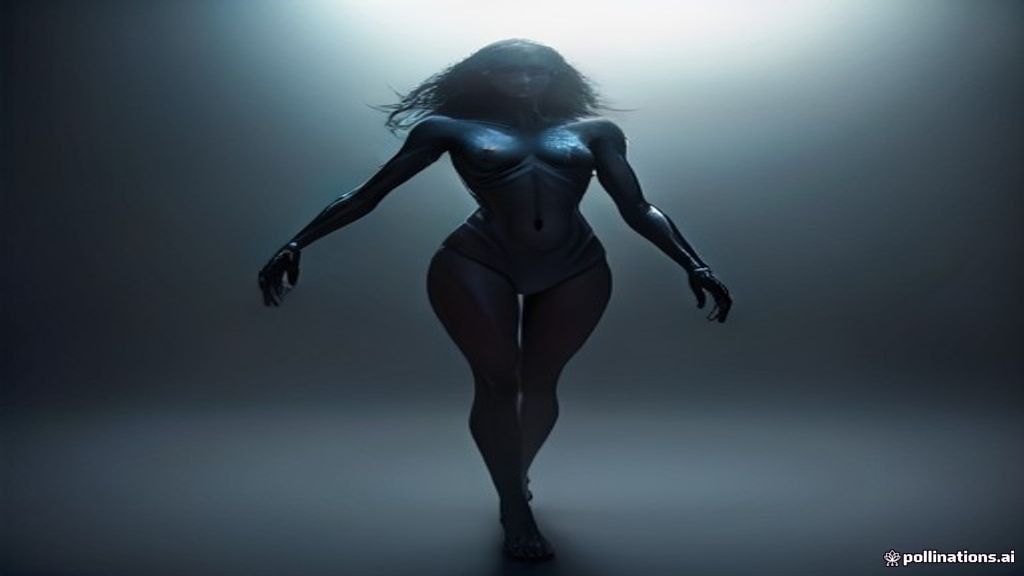
This is what transhumanist gap looks like. Those with access to life extension disparity-defying tech will eventually become so biologically different from the "naturals" that they may as well be a different species. This "Homo Optimus" would have:
- Superior immune systems that are resistant to all known pathogens.
- Neural interfaces that allow for direct connection to artificial intelligence.
- Muscle density and bone strength that do not degrade with time.
The rest of humanity—the "Homo Sapiens Classic"—will be left behind, not because of a lack of will, but because they lack the capital to upgrade their biological operating system. This isn't just about living longer; it's about the quality of the "being" that is doing the living.
The Cognitive Enhancement Gap
Perhaps the most dangerous aspect of the biohacking divide is not physical longevity, but cognitive enhancement. We are already seeing the early stages of this with off-label use of focus-enhancing drugs. But the future holds much more: neural implants, sophisticated nootropic stacks tailored to individual DNA, and even epigenetic reprogramming of the brain’s plasticity.
Why is this a problem?
If the wealthy can buy higher IQs, better memory retention, and faster processing speeds for their children, then the idea of "meritocracy" evaporates. In a meritocracy, we assume that everyone has a relatively equal playing field and that hard work leads to success. But if one child is biologically engineered to be smarter and more focused than another, the competition is over before it even begins.
This creates a permanent underclass. If you can't afford the "brain upgrades," you can't compete for the high-paying jobs. If you can't get the high-paying jobs, you can't afford the longevity treatments. It is a vicious cycle that locks longevity inequality into the very fabric of our social structure. We are essentially coding the class system into our neurons.
Can We Democratize Living Forever?
Is there a way out? Can we prevent this biological schism?
The optimistic view is that technology always starts as a luxury and eventually becomes a utility. Think about mobile phones. In the 1980s, they were bricks owned only by Wall Street moguls. Today, there are more active mobile connections than people on Earth. The hope is that cellular rejuvenation and senolytics will follow a similar "Moore’s Law" of biology—dropping in price until they are accessible to everyone.
But there is a catch.
Unlike silicon chips, biological upgrades require immense resources and highly personalized medical supervision. You can't just "download" a younger heart. Furthermore, there is a strong incentive for those at the top to keep these technologies exclusive. If everyone is "super," then no one is. The competitive advantage of longevity and cognitive enhancement only exists if others don't have it.
To truly democratize these advancements, we would need to shift our entire global healthcare philosophy. We would need to treat "aging" as a disease that qualifies for public funding and universal coverage. Until we stop seeing death as an inevitability and start seeing it as a technical problem to be solved for all of humanity, longevity inequality will continue to widen.
Closing the Gap Before It Hardens
The race to extend human life is the most exciting endeavor in our history. We are on the verge of conquering the "Great Leveler" and reclaiming years that were once lost to the fog of old age. However, we must be careful that in our quest to kill death, we don't accidentally kill our shared humanity.
We are currently at a crossroads. We can choose a path where the benefits of longevity science are shared, elevating the baseline of health for every person on the planet. Or, we can continue on our current trajectory, where longevity inequality creates a world of gods and ghosts—where one class of people enjoys eternal summer while the rest are left to face the winter of their biology alone.
The science is moving fast. The ethics need to move faster. Because once the biological divide is written into our genetic code, it might be impossible to erase. We aren't just building better bodies; we are building the future of our social order. Let’s make sure it’s a future where everyone has the right to keep their clock ticking.
Posting Komentar untuk "The Biohacking Divide: Are We Coding Biological Inequality?"