Acoustic Resonance Analysis for Early-Stage Defect Detection in High-Speed Industrial Bearings
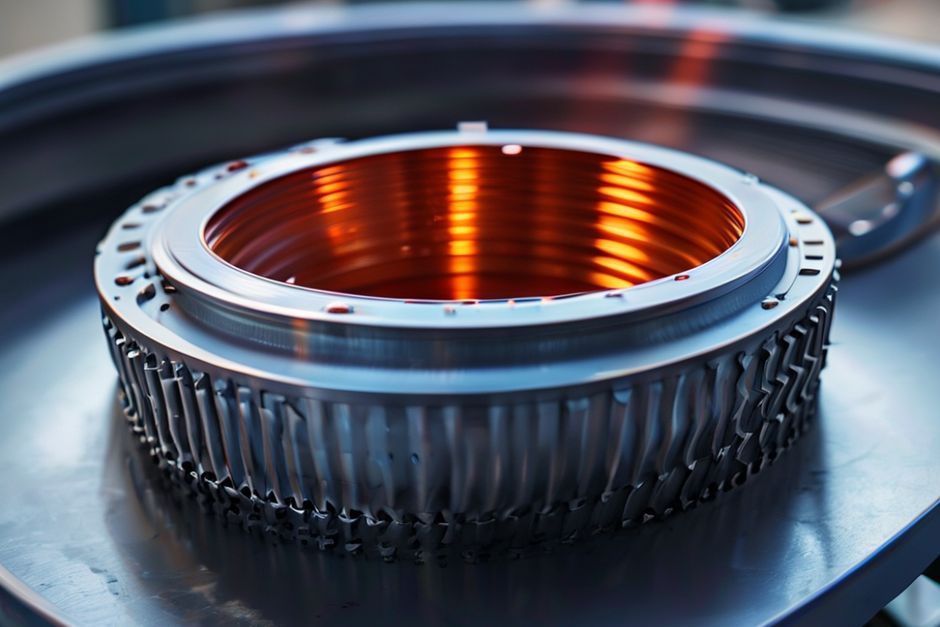
Acoustic Resonance Analysis for Early-Stage Defect Detection in High-Speed Industrial Bearings
In the modern industrial landscape, high-speed rotating machinery forms the backbone of critical infrastructure, ranging from power generation turbines and aerospace propulsion systems to high-precision CNC machining centers. At the heart of these machines lie rolling element bearings, which are subjected to extreme centrifugal forces, thermal gradients, and cyclic loading. The failure of a single bearing in a high-speed environment is not merely a maintenance inconvenience; it is a potential catalyst for catastrophic system failure, significant financial loss, and safety hazards.
Traditional vibration monitoring has long been the industry standard for assessing bearing health. However, as rotational speeds increase, the signal-to-noise ratio of conventional low-frequency vibration monitoring degrades. This is where Acoustic Resonance Analysis (ARA) emerges as a revolutionary diagnostic tool. By focusing on the high-frequency structural resonances excited by microscopic defects, ARA provides a window into the earliest stages of degradation long before they manifest as detectable vibrations or heat.
Table of Contents
- 1. Introduction to High-Speed Bearing Dynamics
- 2. The Physics of Acoustic Resonance
- 3. ARA vs. Conventional Vibration Analysis
- 4. Early-Stage Defect Mechanisms in High-Speed Bearings
- 5. Advanced Sensor Technology for ARA
- 6. Signal Processing and Feature Extraction
- 7. Integration with Artificial Intelligence and Machine Learning
- 8. Real-World Industrial Applications
- 9. Challenges in ARA Implementation
- 10. Future Trends in Acoustic Diagnostics
- 11. Conclusion
1. Introduction to High-Speed Bearing Dynamics
High-speed bearings are typically defined by their DN factor (bore diameter in mm multiplied by the speed in RPM). When this value exceeds certain thresholds, the internal dynamics of the bearing change significantly. Centrifugal forces cause the rolling elements to load more heavily against the outer race, and gyroscopic moments can lead to sliding rather than pure rolling. In these conditions, even a microscopic pit or spall on a raceway acts as a high-energy impulse source.
Standard monitoring techniques often fail to capture these impulses because the energy is distributed across a wide frequency spectrum and is often masked by the "noise" of the machine’s operation (gears, motors, and structural vibrations). Acoustic Resonance Analysis shifts the focus from the rotational frequency to the natural frequencies of the bearing components themselves. When a defect strikes another surface, it "rings" the bearing like a hammer hitting a bell. ARA listens for that bell-like ring.
2. The Physics of Acoustic Resonance
Every physical structure has a set of natural frequencies at which it prefers to vibrate. These frequencies are determined by the material’s stiffness, mass, and geometry. In the context of industrial bearings, the inner race, outer race, and individual rolling elements each have distinct resonant modes.
When a rolling element passes over a surface defect (such as a fatigue crack or a point of subsurface delamination), a transient elastic wave is generated. This wave propagates through the bearing material at the speed of sound. Because the duration of the impact is incredibly short, it excites a very broad range of frequencies. This broad excitation inevitably overlaps with the natural resonant frequencies of the bearing housing and the races. The resulting "acoustic resonance" amplifies the signal of the defect, making it detectable even if the physical size of the defect is measured in micrometers.
3. ARA vs. Conventional Vibration Analysis
To understand the superiority of ARA for early detection, we must compare it with traditional Vibration Analysis (VA):
- Frequency Range: VA typically monitors frequencies from 0 to 20 kHz. ARA operates in the ultrasonic range, often between 20 kHz and several hundred kHz.
- Sensitivity: VA is effective for detecting "macro" defects like imbalance, misalignment, or late-stage bearing wear. ARA is sensitive to "micro" events like the breaking of a lubricant film or the very first crack in a hardened steel surface.
- Noise Immunity: Most mechanical noise from the plant floor (engines, fans, fluid flow) resides in the lower frequency spectrum. By filtering for high-frequency acoustic resonances, ARA inherently ignores the "background chatter" of the factory.
- Proactivity: ARA can identify bearing fatigue weeks or even months before VA detects a significant increase in velocity or acceleration levels.
4. Early-Stage Defect Mechanisms in High-Speed Bearings
High-speed bearings fail differently than their low-speed counterparts. The primary mechanisms that ARA is designed to detect include:
A. Subsurface Fatigue: Under high cyclic loading, micro-cracks form beneath the raceway surface. These cracks eventually propagate to the surface, causing spalling. ARA can detect the acoustic emissions generated by the growth of these subsurface cracks.
B. Lubrication Starvation: At high speeds, the lubricant film can become dangerously thin. Metal-to-metal contact, even at a microscopic level, creates high-frequency "asperity contact" noise. ARA characterizes this as an increase in the baseline acoustic energy before any temperature rise is noted.
C. Cage Instability: In high-speed bearings, the cage (separator) can become unstable due to centrifugal forces. This leads to cage rattling or whirling, which excites specific high-frequency resonances that ARA is uniquely suited to identify.
5. Advanced Sensor Technology for ARA
Capturing acoustic resonance requires specialized hardware. Standard accelerometers often lack the frequency response necessary for ARA. The following sensors are typically utilized:
1. Piezoelectric Acoustic Emission (AE) Sensors: These are the workhorses of ARA. They utilize piezoelectric crystals that convert mechanical stress (from acoustic waves) into electrical voltage. They are specifically tuned to be highly sensitive in the 20 kHz to 1 MHz range.
2. Fiber Optic Sensors: In environments with high electromagnetic interference (EMI) or extreme temperatures, fiber optic sensors are used. They detect changes in light reflection or phase caused by structural vibrations.
3. Laser Doppler Vibrometers (LDV): For non-contact measurement, LDVs provide incredible precision by measuring the Doppler shift of a laser beam reflected from the bearing housing. While expensive, they are invaluable for high-speed testing where sensor mass might alter the bearing’s behavior.
6. Signal Processing and Feature Extraction
The raw data from an acoustic sensor is often a chaotic "grass" of high-frequency signals. The magic of ARA lies in the signal processing. Key techniques include:
Envelope Analysis (Demodulation)
This is perhaps the most critical step. Since the defect impulses excite high-frequency resonances, we "envelope" the signal to strip away the high-frequency carrier and reveal the repetition rate of the impacts. If the repetition rate matches the calculated Ball Pass Frequency of the Outer Race (BPFO), the defect is confirmed.
The Kurtogram and Spectral Kurtosis
Kurtosis is a statistical measure of the "peakedness" of a signal. A healthy bearing has a Gaussian (normal) distribution of noise. A defective bearing produces impulsive spikes, which increase the Kurtosis. A Kurtogram helps engineers select the optimal frequency band for filtering the signal to maximize the visibility of those spikes.
Wavelet Transform
Unlike the Fourier Transform, which loses time-domain information, the Wavelet Transform allows for a time-frequency representation. This is crucial for detecting transient, non-stationary signals typical of early-stage bearing defects.
7. Integration with Artificial Intelligence and Machine Learning
The volume of data generated by high-frequency ARA is immense. Manual analysis is no longer sustainable for large-scale industrial plants. This has led to the integration of Artificial Intelligence (AI):
- Automated Pattern Recognition: Convolutional Neural Networks (CNNs) can be trained on spectrograms of acoustic signals to automatically classify defects as "inner race," "outer race," or "ball" defects.
- Anomaly Detection: Unsupervised learning models establish a baseline "fingerprint" of a healthy bearing. Any deviation from this resonance fingerprint triggers an alert, even if the specific failure mode is unknown.
- Remaining Useful Life (RUL) Prediction: By tracking the trend of acoustic energy and resonance shifts over time, Recurrent Neural Networks (RNNs) can predict with high accuracy how many hours of operation remain before the bearing reaches a critical state.
8. Real-World Industrial Applications
The application of ARA spans various sectors where high-speed rotation is critical:
Aerospace and Aviation
Jet engine mainshaft bearings operate at speeds exceeding 15,000 RPM. ARA is used during ground testing and increasingly in onboard Health and Usage Monitoring Systems (HUMS) to prevent mid-air engine shutdowns.
High-Precision Machining
CNC spindles that rotate at 40,000 to 100,000 RPM require extreme precision. A bearing defect can cause "chatter" marks on a finished part. ARA detects these defects early enough to allow for a planned spindle rebuild, preventing the scrapping of expensive workpieces.
Power Generation
In steam and gas turbines, the mass of the rotor is enormous. While low-frequency vibration is monitored for balance, ARA is used to listen for the "micro-clicks" of bearing fatigue that precede a full-scale wipe of the babbitt or rolling elements.
9. Challenges in ARA Implementation
Despite its advantages, ARA is not a "plug-and-play" solution. Several challenges must be addressed:
Data Volume: Sampling at 500 kHz or higher generates gigabytes of data in minutes. This requires robust edge computing capabilities to process data locally before sending summaries to the cloud.
Signal Attenuation: High-frequency signals dissipate quickly as they travel through interfaces (e.g., from the bearing race to the housing to the sensor). Proper sensor mounting—using threaded studs or specialized adhesives—is mandatory.
Expertise: Interpreting resonance data requires a deep understanding of both mechanical engineering and signal processing. The industry is currently facing a shortage of "Category IV" vibration analysts who are proficient in acoustic emission techniques.
10. Future Trends in Acoustic Diagnostics
The future of ARA is moving toward Wireless and Self-Powered Sensors. These sensors will use energy harvesting (from the machine’s own vibration or heat) to power the acoustic monitoring and transmit data via 5G or LoRaWAN. Furthermore, the concept of the "Digital Twin" will integrate ARA data into a virtual model of the machine, allowing for real-time simulations of how a detected defect will affect the overall system performance over time.
Another exciting frontier is the use of Acoustic Holography, which uses an array of sensors to "map" the acoustic field around a bearing, pinpointing the exact location of a defect within the bearing geometry without disassembling the unit.
11. Conclusion
Acoustic Resonance Analysis represents the pinnacle of predictive maintenance for high-speed industrial bearings. By moving beyond the limitations of human hearing and traditional vibration sensors, ARA allows us to listen to the "ultrasonic whispers" of machinery fatigue. In an era where downtime is measured in thousands of dollars per minute, the ability to detect a defect at its absolute inception is not just a technical advantage—it is a competitive necessity.
As sensor technology becomes more affordable and AI-driven analysis becomes more accessible, ARA will likely transition from a niche tool used only in critical aerospace applications to a standard feature of industrial IoT ecosystems worldwide. Investing in Acoustic Resonance Analysis today is an investment in the reliability, safety, and longevity of the high-speed infrastructure that drives our world.
This article was written to provide a deep technical understanding of Acoustic Resonance Analysis. For further inquiries into implementing ARA for your specific industrial application, consult with a certified vibration specialist or reliability engineer.
Posting Komentar untuk "Acoustic Resonance Analysis for Early-Stage Defect Detection in High-Speed Industrial Bearings"